Comment l'IA s'intègre-t-elle à la fabrication traditionnelle du whisky?
6 min de lecture
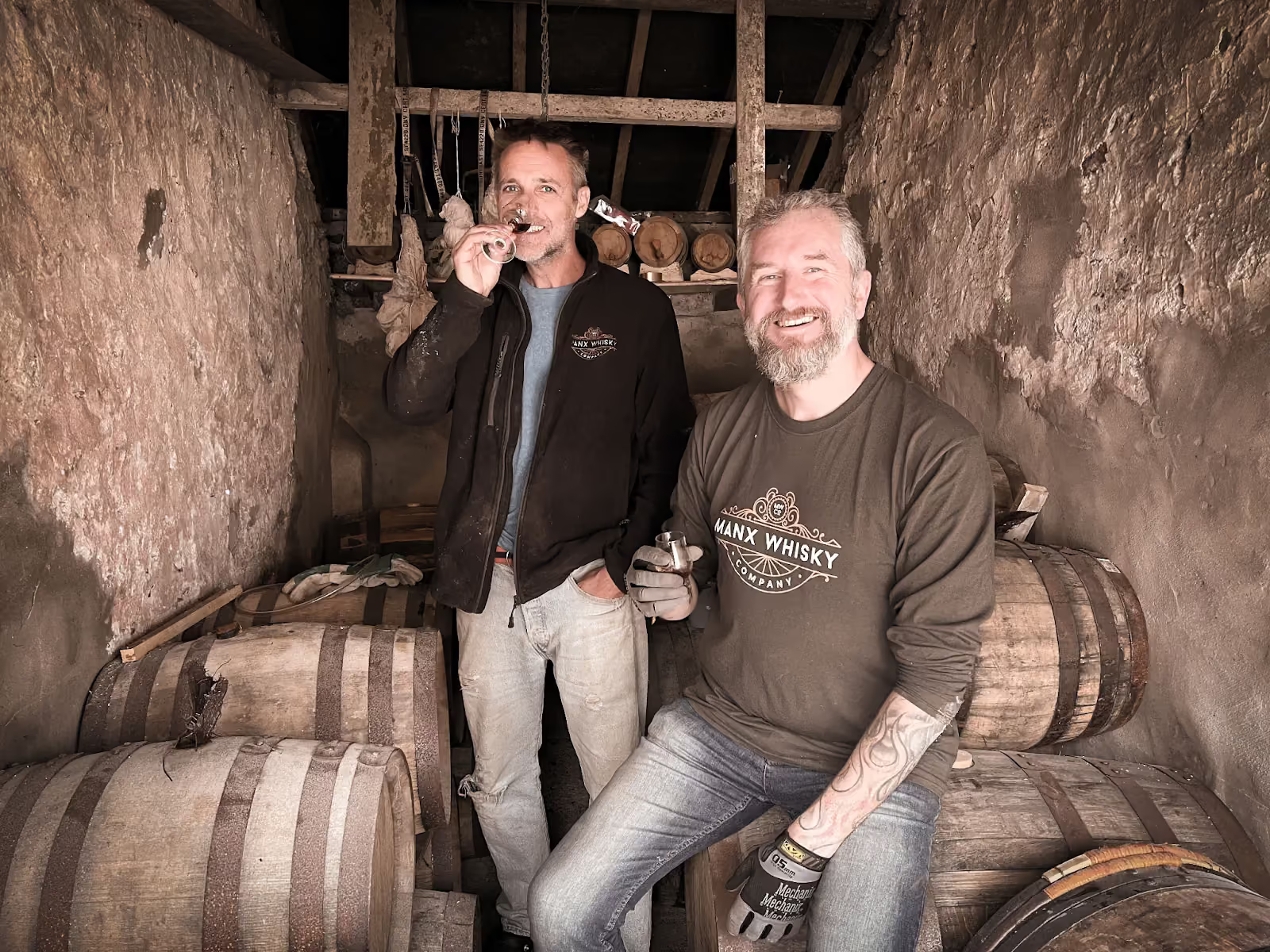
Cet article a été publié à l'origine sur manxwhisky.com par la Manx Whisky Company, une petite distillerie traditionnelle basée à Baldrine, sur l'île de Man. Fondée en 2019 par Magnus Grinneback et Scott Young, elle se consacre à la production de single malt authentique à partir de matières premières locales. Nous le publions sur AgentAya avec leur autorisation. Vous pouvez consulter l'article original ici.
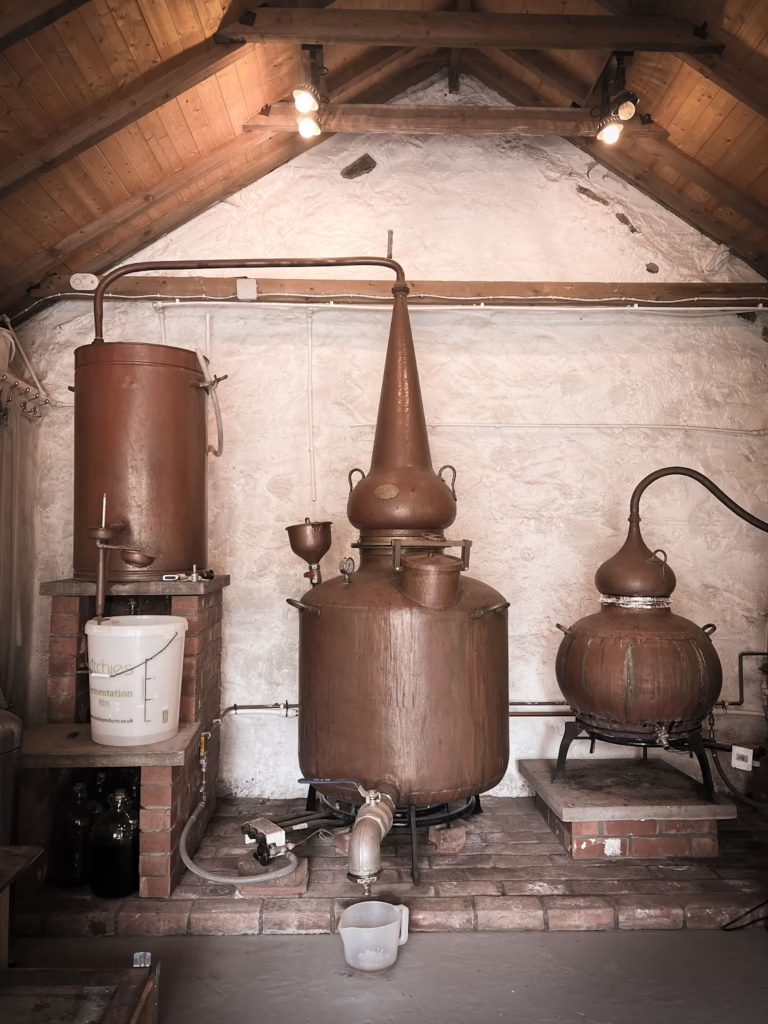
Notre fabrication de whisky est très traditionnelle. Nous collectons l'orge auprès de Ballavell Farm, et une grande partie de ce qui suit aurait été familière à un distillateur d'il y a 250 ans. Vous pouvez en apprendre davantage sur nos installations ici.
Alors, comment l'intelligence artificielle s'intègre-t-elle dans tout cela?
De bien des façons, en réalité. Nous suivons de près les développements de l'IA et réfléchissons constamment à la manière dont elle peut faciliter notre travail. Voyons quelques exemples, du plus simple au plus avancé.
Les bases: comment nous utilisons l'IA pour les tâches quotidiennes
1. Rédaction: des communications plus percutantes
Nous n'utilisons pas l'IA pour écrire à partir de zéro. Les publications Instagram, les articles de blog, y compris celui-ci, et les newsletters commencent tous par un brouillon que nous rédigeons nous-mêmes.
En revanche, nous utilisons l'IA pour peaufiner le texte initial. Cela accélère le passage du premier jet à la publication finale. Nous avons essayé d'entraîner un GPT à rédiger des publications de A à Z, mais les résultats ne sont pas assez bons: trop de clichés et trop de sensationnalisme. Pour l'instant, nous préférons écrire avec notre propre voix et utiliser l'IA pour l'affiner plutôt que la remplacer.
2. Petits travaux de code: améliorer les notifications clients
Notre site fonctionne sur Shopify, qui est une plateforme solide. Il nous arrive de devoir ajuster la logique, par exemple pour envoyer des e-mails de confirmation différents selon ce que le client a acheté. Une réservation de dégustation nécessite des informations très différentes d'un achat de bouteille.
Ici, l'IA s'est révélée extrêmement utile. J'ai une certaine expérience du code qui remonte à mes années d'études il y a 30 ans, mais je suis complètement perdu face à l'environnement de script de Shopify. L'IA nous permet d'effectuer ces modifications nous-mêmes plutôt que d'embaucher un développeur.
À l'avenir, nous pourrions remplacer certains des modules payants que nous utilisons actuellement, comme la vérification de l'âge, par notre propre code assisté par IA. Ces modules ne sont pas chers, mais si nous pouvons économiser £10 par mois et construire quelque chose de mieux adapté à nos besoins, cela en vaut la peine.
3. Automatisation administrative: simplifier les déclarations mensuelles de la distillerie
Gérer une distillerie implique des déclarations mensuelles de production et de sorties d'entrepôt. Autrement dit, des formulaires, pas la partie la plus passionnante du métier.
Nous avons utilisé l'IA, en l'occurrence Claude, pour écrire un script qui remplit automatiquement les formulaires à partir de nos données de production. Rien de révolutionnaire, mais cela nous fait gagner 5–10 minutes chaque mois. Surtout, cela nous a montré à quel point il est facile de créer de petits scripts qui automatisent des tâches précises.
Comment nous utilisons l'IA pour créer des outils de distillerie
1. Créer notre propre application de mesure
Au cours d'une semaine de distillation typique, nous effectuons de nombreuses mesures et de nombreux calculs: températures de l'eau de brassage, corrections de température pour les lectures d'alcool et de sucre, calculs de dilution, et plus encore.
Il existe de nombreux outils en ligne qui gèrent chacun de ces calculs séparément. Cependant, ils fonctionnent rarement exactement comme nous, ce qui nous oblige souvent à passer d'un site à l'autre et à assembler les résultats manuellement.
Pour résoudre ce problème, nous avons créé notre propre application adaptée à notre flux de travail. Elle contient tout ce dont nous avons besoin en un seul endroit. Cela simplifie le travail à la distillerie, réduit le temps passé à recouper les chiffres et, surtout, diminue le risque d'erreurs.
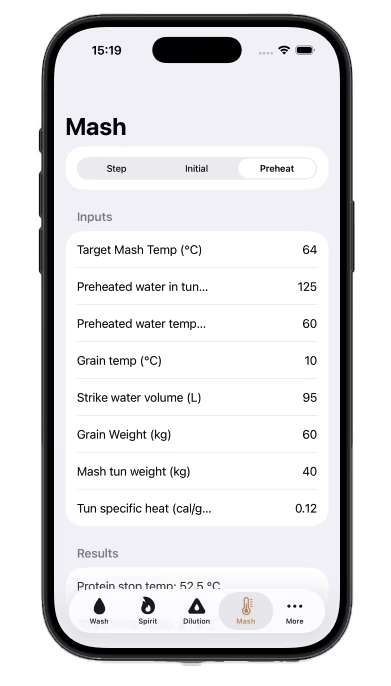
Voici un exemple de la façon dont nous avons adapté un calculateur de brassage standard à notre installation particulière. Sans entrer dans les détails, il prend en compte l'eau préchauffée et calcule à la fois le palier protéinique que nous effectuons systématiquement et la température d'empâtage requise.
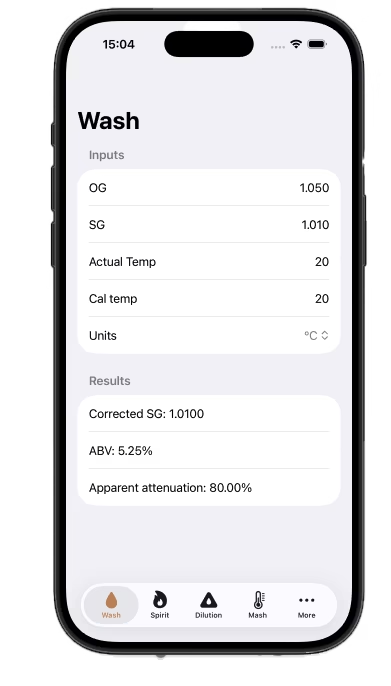
En voici un autre exemple. Il s'agit d'un outil standard de correction de température pour hydromètre, mais il est relié directement à la densité initiale du fermenteur. Il n'est pas nécessaire d'effectuer une correction de température séparée. Tout est calculé au même endroit, ce qui nous donne la lecture d'alcool et l'atténuation sans passer d'un écran ou d'un outil à l'autre.
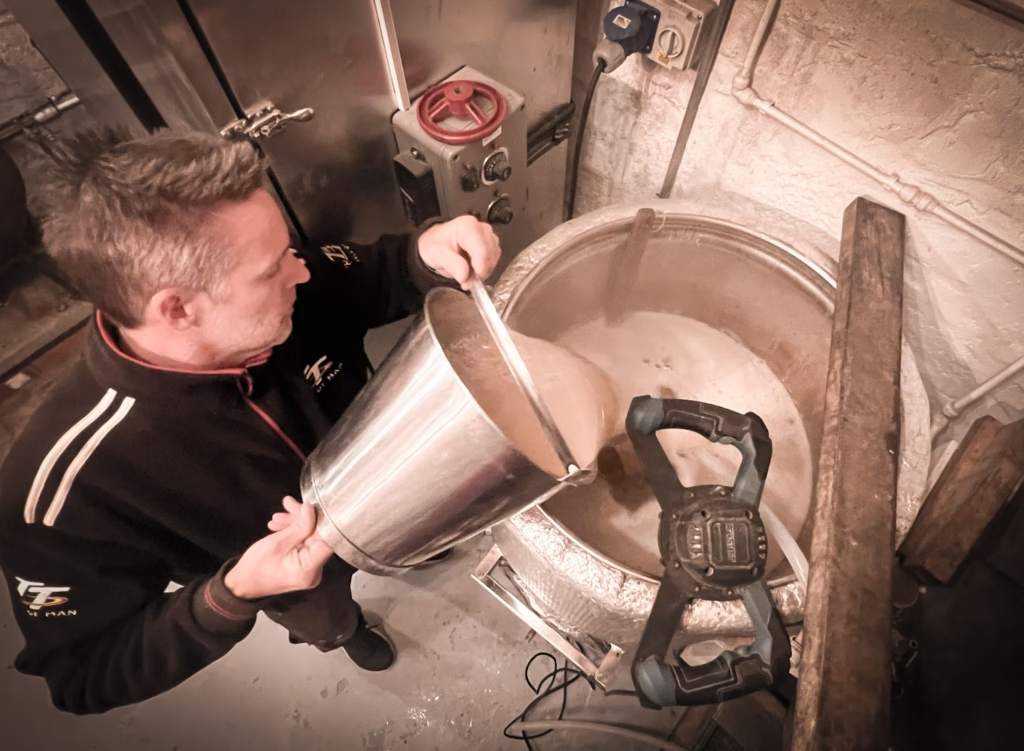
2. Logiciel de gestion des fûts et de la distillerie
Jusqu'à récemment, nous gérions nos fûts et notre inventaire avec Excel. Cela fonctionnait, mais c'était lourd et chronophage. Les erreurs sont vite arrivées, et suivre quel brassin est allé dans quel fût exige une concentration totale.
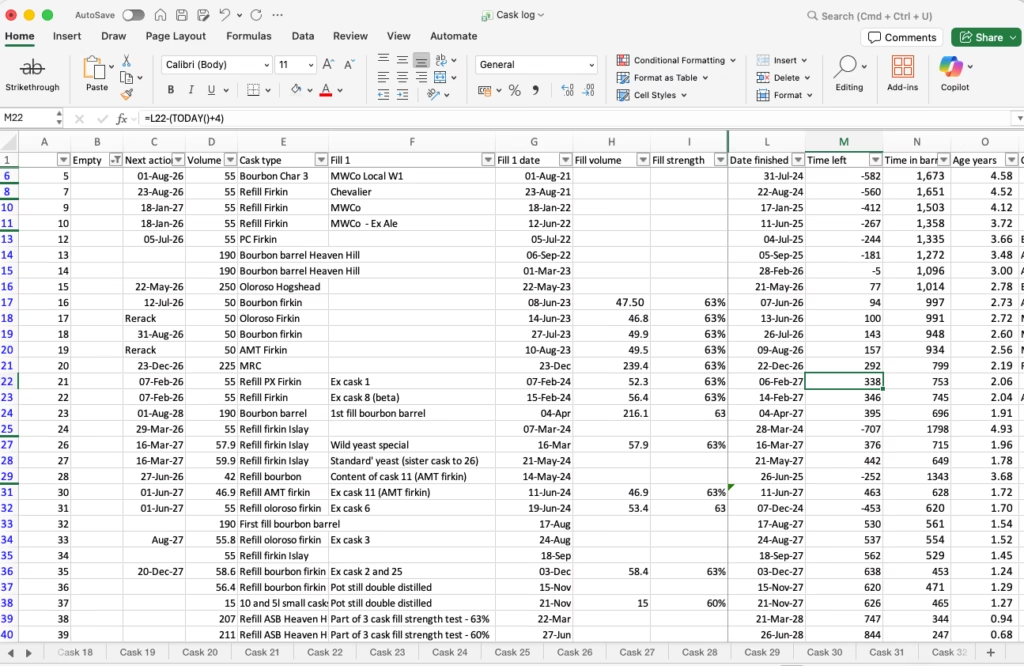
Voici un exemple de notre ancien aperçu des fûts sous Excel. En plus de cela, chaque fût disposait de sa propre feuille de calcul individuelle. À mesure que notre inventaire grandissait, cela est rapidement devenu difficile à gérer.
Nous avons désormais utilisé l'IA pour nous aider à créer notre propre logiciel de gestion des fûts. En un clic, nous pouvons consulter l'historique complet de chaque fût, son âge et les données de production associées. Le système nous rappelle également quand un échantillonnage ou d'autres actions sont à effectuer.
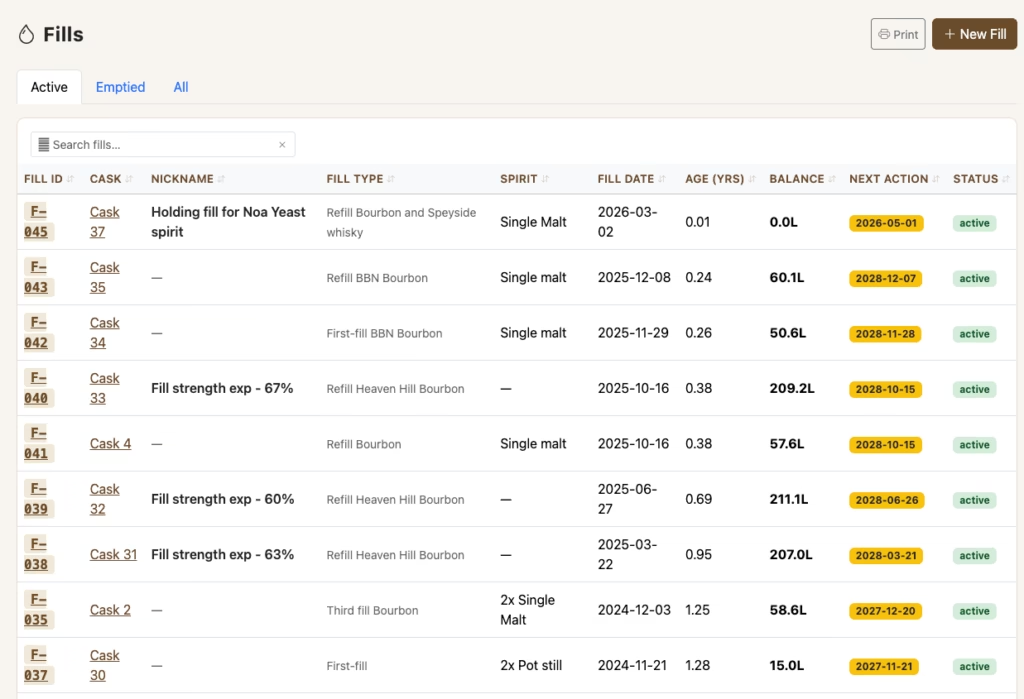
Ci-dessus, une capture d'écran montrant les actions en retard et la liste de nos remplissages actifs, un net contraste avec la solution basée sur Excel.
Nous travaillons actuellement à l'intégration des registres de brassage et de distillation dans le système. La dernière étape consistera à ajouter des scripts qui préparent automatiquement nos déclarations mensuelles de production et de sortie pour Customs & Excise.
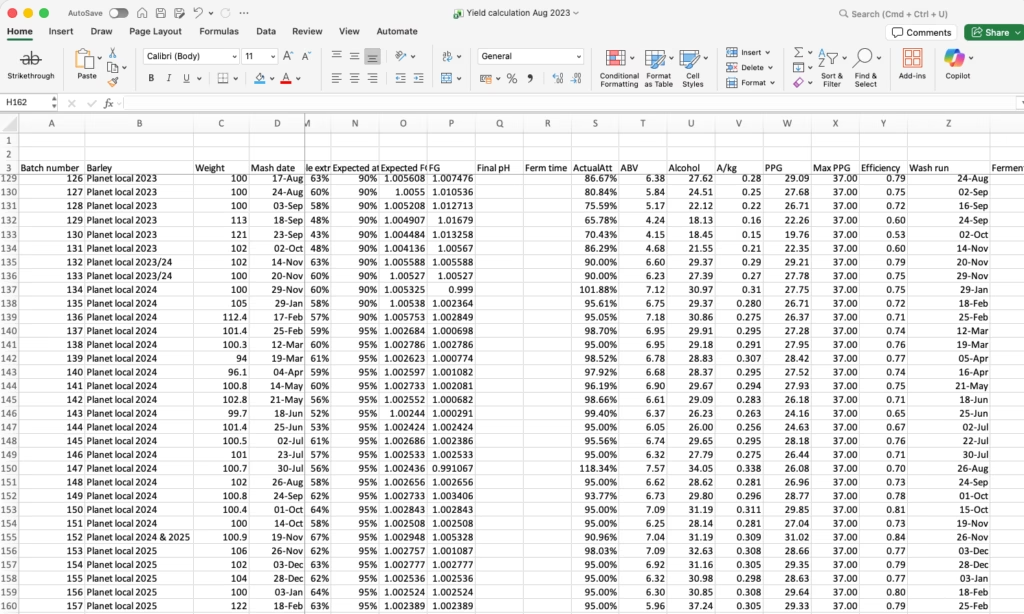
Ici, vous pouvez voir une partie de notre ancien journal de brassage: beaucoup de saisies manuelles et une quantité importante de calculs.
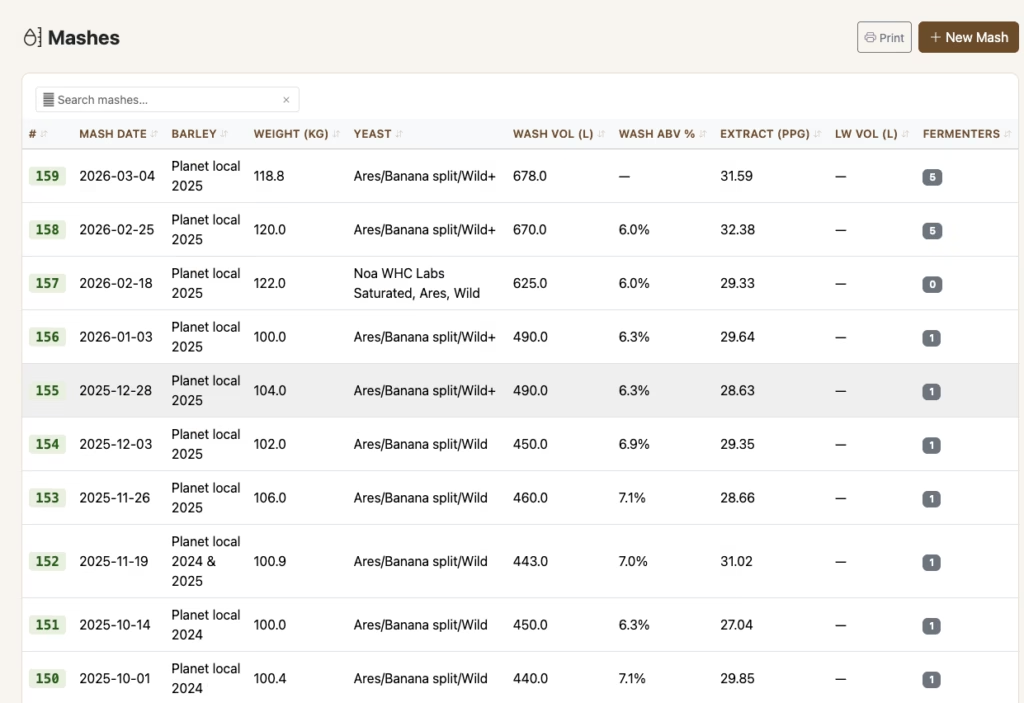
En comparaison, voici le nouveau système: propre, structuré et beaucoup plus facile à parcourir. Il est encore récent, mais nous nous attendons à ce qu'il simplifie considérablement la tenue des registres, un aspect essentiel de la gestion d'une distillerie.
Utiliser l'IA pour la recherche et la conception de la distillerie
L'IA est aussi un excellent assistant de recherche. Si un sujet nous intrigue, par exemple l'effet d'une orge riche en protéines sur les arômes, l'IA peut nous fournir une introduction structurée en quelques minutes. Cela nous aide à nous mettre rapidement à niveau avant de décider d'approfondir ou non.
Elle est également utile pour planifier des améliorations matérielles. Nous travaillons actuellement sur un système amélioré de récupération de l'eau chaude du condenseur. L'IA nous a aidés à concevoir le système de contrôle électronique de la pompe, à suggérer des composants, à estimer les coûts et à identifier des fournisseurs.
Une grande partie de ce travail pourrait se faire sans IA, mais cela prendrait beaucoup plus de temps.
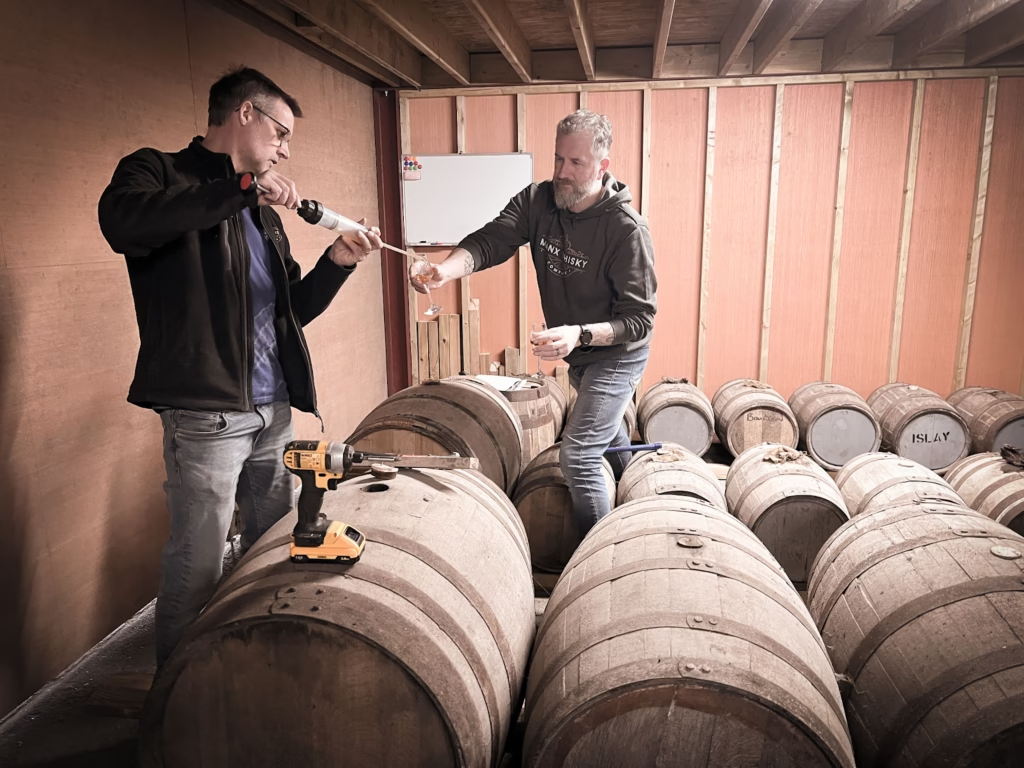
Réflexions finales
L'IA nous permet de rechercher, de concevoir et de construire des systèmes qui auraient auparavant été trop coûteux ou trop chronophages pour une petite distillerie. Les outils eux-mêmes sont peu onéreux. Nous utilisons à la fois ChatGPT et Claude. Chacun coûte environ 20 USD par mois pour un abonnement pro.
L'IA ne changera pas notre façon de malter, de brasser, de distiller ou de faire vieillir notre whisky. Mais en tant que petite entreprise, nous y trouvons un allié précieux, qui réduit le temps consacré à l'administration et augmente le temps passé là où cela compte le plus: fabriquer du whisky et améliorer notre production.